
Understanding Live Roulette Odds

While I take a moment to analyse what renders live casino gaming genuinely compelling, the mathematics behind the wheel always leads the way. Live roulette odds are not just abstract percentages displayed on a felt layout; they govern every decision you take and every payout you collect. In the UK market, where the Gambling Commission upholds strict oversight, transparent understanding of these probabilities distinguishes recreational play from blind chance. For anyone exploring a platform like casino dexsport, understanding how European and American wheels differ, why the house edge persists, and how inside and outside bets perform against each other builds a more informed session. I intend to walk through each element methodically, from basic probability calculations to the practical impact of special rules and bet combinations, because once you master the underlying numbers, the entire live studio experience grows sharper and more rewarding without diminishing any of its entertainment value.
Wagering Strategies and the Mathematical Limits They Encounter
I observe widespread notion in betting systems that pledge to beat the house edge, and my examination of roulette odds compels me to address this straightforwardly. The Martingale system, which increases stakes after every loss on even-money bets, looks mathematically attractive on the surface because a single win regains all prior losses plus a unit profit. However, the practical limits appear quickly when I determine the exponential stake growth. Starting at ten pounds, the eighth consecutive loss requires a bet of 1,280 pounds, and the accumulated risk reaches 2,550 pounds merely to pursue an initial ten-pound profit. Table limits are present specifically to restrict this escalation, and every live table I have noted at UK-facing platforms enforces maximum wagers that typically enable only six to eight Martingale progressions before the ceiling stops the next doubling. The probability of hitting a losing streak long enough to cause either the table limit or bankroll exhaustion is low per individual sequence but inevitable over sufficient trials.
More advanced systems like Fibonacci, Labouchere, or D’Alembert modify the progression mechanics but leave the fundamental mathematical problem unaltered. I point out that no stake adjustment pattern can alter the independent probability of each spin or the payout ratios that produce the house edge. A negative expectation game continues to be negative regardless of how the wagers are sequenced. What systems do alter is the distribution of wins and losses across a session, often generating many small wins interspersed with occasional catastrophic losses. This reshaping of variance can make a session appear more engaging, and I recognize the psychological appeal of walking away with modest profits most nights. The critical point I raise is that any system should be treated as a bankroll management and entertainment tool rather than a genuine edge. When I visit the live tables available through Dexsport Casino, I consider progressive betting strictly as a way to organize my session’s risk, never as a method to convert a mathematically losing proposition into a winning one.
The fundamental probability underlying each spin
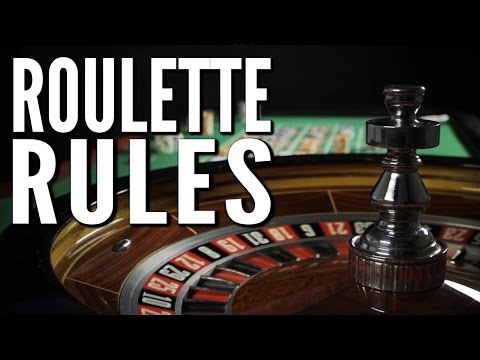
I commence with the wheel itself because the physical design determines everything that follows. A regular European roulette wheel features 37 pockets numbered zero through 36, while the American version adds a double zero to make 38 pockets. This one difference transforms the entire probability landscape. When I determine the chance of hitting a straight-up number on a European wheel, I separate one by 37, producing approximately 2.70 percent. On an American wheel, the similar bet drops to a 2.63 percent probability since that extra pocket dilutes every wager. The live casino environment at Dexsport Casino usually features European wheels streamed from professional studios, which directly provides UK players a mathematical advantage relative to American variants. I observe many newcomers miss that the zero pocket is not red nor black, not odd nor even in most payout structures, meaning every outside bet that appears close to a coin flip in fact carries slightly less than a fifty percent chance of landing. Grasping this essential imbalance is the first step towards appreciating why particular bets have different risk profiles.
Beyond straightforward straight-up calculations, I believe that players gain enormously from grasping compound probabilities across multiple spins. Each spin is an independent event, signifying the wheel has no memory of previous outcomes and the odds restart completely every time the dealer launches the ball. When I hear someone assert a number is due since it has not appeared in fifty spins, I recognise the gambler’s fallacy at work. The probability of hitting any specific number remains exactly one in 37 on every single European spin irrespective of past history. Where probability becomes more useful is in calculating the likelihood of hitting a colour or column over a series of bets. I often describe that while a single red bet holds a 48.65 percent chance on a European wheel, the probability of hitting red at least once over five consecutive spins grows significantly, though each individual spin stays unchanged. This distinction counts enormously when planning betting progressions or deciding how much risk capital to allocate across a live session.
Bankroll Allocation and Session Planning Grounded in the Odds
Converting roulette odds into concrete bankroll decisions necessitates tangible calculations that I apply before every live session. The house edge of 2.70 percent on European roulette signifies that for every one hundred pounds wagered across all bet types and outcomes, the expected theoretical loss equals two pounds seventy pence over the long term. This figure provides a benchmark for estimating session costs, but the volatility leads to individual evenings diverge significantly. I estimate that a player flat-betting five pounds per spin across one hundred spins on even-money wagers may reasonably anticipate to finish somewhere between negative forty pounds and positive thirty-five pounds approximately two-thirds of the time, with the remaining third yielding more extreme results. These ranges come from standard deviation calculations rather than precise predictions, but they provide a realistic envelope for planning. Access to the live tables through a platform like Dexsport Casino implies I can set deposit limits beforehand and view the expected loss range as the cost of the entertainment, comparable to purchasing a ticket for any other leisure activity.
For sessions concentrated on inside bets, the bankroll planning shifts dramatically because the lower hit frequency requires deeper reserves to endure dry spells. I compute that a player covering five numbers per spin with straight-up bets expects to hit roughly every 7.4 spins on average, but facing twenty or more consecutive losses is neither unusual nor mathematically surprising over a lengthy session. The bankroll must accommodate these sequences without requiring a premature exit. I advise dividing the session budget into units sized so that at least one hundred and fifty units are accessible if inside betting controls the strategy. For even-money players, fifty to one hundred units usually provide sufficient cushion. The deposit and withdrawal mechanisms at Dexsport Casino, which I know include standard UK payment methods with typical processing windows, signify that session funding can be organized efficiently with predetermined limits. The key discipline I stress is setting the session cost as an entertainment expense before the first spin and respecting that boundary regardless of whether the results fall above or below expectation in the short term.
The way Live Dealer Roulette Differs From Automated Wheels
The live studio environment introduces subtle differences that impact how I interpret the same mathematical probabilities. When a professional dealer rotates the wheel and releases the ball, the physical process includes inherent variability that automated random number generators attempt to simulate but cannot truly replicate. I observe that dealer spin speeds, ball launch angles, and wheel rotation rates all vary slightly from round to round, which means the physical conditions of each spin are never identical. This does not alter the fundamental probability of any outcome because the wheel remains balanced and the pockets uniformly sized, but it does eliminate the possibility of the mechanical biases that occasionally appeared in older physical wheels. The live streaming technology at Dexsport Casino provides high-definition video with multiple camera angles, and I discover that watching the ball’s deceleration into the pocket area adds a dimension of anticipation that the mathematics alone cannot capture.
From a timing perspective, live roulette spins occur at a measured pace that enables proper bet placement and reflection between rounds. I count roughly forty to sixty spins per hour on a typical live table depending on the dealer’s rhythm and the number of players placing bets, which is considerably slower than an automated digital wheel that might produce hundreds of outcomes in the same period. This pacing has genuine strategic implications because the slower rate means fewer independent trials per session, and therefore the short-term variance governs the experience far more than the long-term house edge. I advise UK players accustomed to rapid digital roulette to adjust their expectations when moving to the live format; a session of two hundred live spins constitutes approximately three to four hours of play rather than the thirty minutes a digital version might require. The bankroll calculations for the same theoretical exposure differ proportionally, and accounting for this pace secures that the entertainment budget extends appropriately across an evening.
Outside Bets and the Concealed Effect of the Zero
Outside bets cover the perimeter of the betting layout and provide near-even-money returns, which makes them the most favored wagers on any live table. I analyse the three even-money categories first: red or black, odd or even, and low or high spanning numbers one through eighteen or nineteen through thirty-six. On a European wheel, each of these carries a 48.65 percent probability of success because the single zero sits outside all three classification systems simultaneously. When I wager twenty pounds on black and the ball lands in the zero pocket, I lose entirely unless a special rule intervenes. The payout is a clean 1 to 1, indicating a winning twenty-pound wager returns forty pounds including stake. The dozen and column bets include twelve numbers each and pay 2 to 1, producing a 32.43 percent chance per spin on a European wheel. I notice these mid-range outside bets appeal to players who want more frequency than straight-ups but more reward than even-money options, and the mathematics supports that positioning precisely.

What I discover consistently overlooked in casual discussions is how the zero pocket systematically undermines outside bet profitability over extended sessions. The gap between the 50 percent expectation many players intuitively have and the actual 48.65 percent probability signifies that for every one hundred spins on even-money bets, the typical outcome skews slightly negative even before considering any betting system. The house edge remains 2.70 percent across all outside bets on a European wheel, identical to inside bets, but the experience appears different because outside bets produce more frequent small wins interspersed with losses. The dozen bets carry slightly different dynamics because covering twelve numbers means the zero pocket represents only one of the 25 losing outcomes rather than one of 19 for even-money bets. I urge UK players exploring Dexsport Casino to track their own results across a session mentally and observe how those single-zero losses accumulate, because seeing the mathematics work in real time builds genuine understanding faster than any theoretical explanation ever could.
The En Prison and La Partage Rules That Shift the Advantage
Some European live roulette tables include special rules that essentially alter the calculations I have outlined so far, and any dedicated UK player should know where these apply. The La Partage rule activates when the ball lands on zero while a player has an even-money outside bet. Instead of losing the entire stake, I get half my wager back right away. This basic mechanism lowers the house edge on even-money bets from 2.70 percent to 1.35 percent because the anticipated loss per zero occurrence is reduced by fifty percent. The En Prison rule offers a different mechanism with comparable mathematical effect: the outside bet becomes held for the following spin, and if it wins, I get back my original stake without any extra payout. If the locked bet loses or hits zero again, it is given up. Both rules essentially cut in half the house edge on qualifying wagers, making them among the best conditions offered in any casino game.
When I look at the live dealer tables available through platforms like Dexsport Casino, I particularly look for French roulette variants that incorporate these rules because they offer genuine value for the outside bettor. Those rules apply only to red, black, odd, even, high, and low wagers, making inside bets and dozen or column bets unaffected. I estimate that over a session of one thousand even-money spins under La Partage, the projected loss drops to approximately 13.5 units compared to 27 units on a standard European table, with flat betting. This difference builds up meaningfully for regular players. The practical takeaway I draw is that anyone whose strategy focuses on even-money progression systems should choose tables with these rules active. The live studio interface typically displays whether La Partage or En Prison applies, and I advise checking this detail before placing any chips because moving tables mid-session often resets the mental accounting many players automatically maintain during play.
Interior Bets and Their True Payout Ratios
Inside bets cover the numbered grid and offer the maximum potential rewards, but they also expose players to the highest volatility. I examine the straight-up bet first because it forms the basis of the complete payout structure. A winning straight-up wager pays 35 to 1, yet the real odds against hitting are 36 to 1 on a European wheel. That one-unit gap between the true odds and the payout generates the house edge. When I stake ten pounds on a individual number and it lands, I collect 360 pounds including my stake returned, but the probability suggests I should anticipate to win once every 37 spins on average. The split bet encompassing two neighboring numbers pays 17 to 1 against real odds of 17.5 to 1, the street bet covering three numbers pays 11 to 1 against real odds of 11.33 to 1, and the corner bet pays 8 to 1 against actual odds of 8.25 to 1. Each of these wagers carries exactly the same house edge of 2.70 percent on a European wheel, a consistency I emphasize because it means no inside bet is mathematically superior to any other in terms of expected value.
The six-line bet encompassing two neighboring rows merits particular attention because it sits at the boundary between inside and outside probability. Offering 5 to 1 with actual odds of 5.17 to 1, I determine that it covers six numbers and therefore represents 16.2 percent of the wheel on a European layout. For UK players using live tables through Dexsport Casino, this bet often attracts because it provides a balance between the excitement of number coverage and the frequency of returns. I remind anyone evaluating bold inside tactics that while the house edge remains constant, the volatility varies enormously. Stacking straight-up bets on a few of numbers creates a binary outcome most spins: either a complete loss or a substantial multiplier. The six-line and corner bets reduce that volatility somewhat while keeping the same theoretical return percentage. Grasping this volatility spectrum is crucial because a player with a small session stake might find themselves exhausted before the long-term mathematics have any significant chance to play out.